Introduction
As Sri Lanka continues expanding its renewable energy capacity, the need for reliable solar power plant monitoring, advanced analytics, and modern SCADA capabilities has never been more important. Medium-scale solar plants—especially in the 5–10 MW range—depend on accurate real-time inverter monitoring, tracker data, and power analytics to optimize performance and ensure stable grid contribution.
However, traditional SCADA systems often fall short when it comes to flexibility, customization, cloud connectivity, and delivering business insights for management and investors. This led us to explore a more scalable, IoT-driven architecture based on ThingsBoard Professional Edition (PE) and ThingsBoard Edge.
With this modern IoT platform, we can now provide end-to-end visibility, multi-site analytics, customizable dashboards, and fault detection for solar plants across Sri Lanka—bringing together both O&M operations and business intelligence needs under one unified solution.
Why We Needed a Modern, Customizable IoT Platform
Medium-scale solar plants today produce massive volumes of telemetry. Operators must track:
-
- Inverter statuses
-
- Power generation
-
- Efficiency metrics
-
- Solar tracker angles
-
- Environmental conditions
-
- Faults and alarms
Meanwhile, management and investors want:
-
- Energy yield trends
-
- Financial performance analytics
-
- Downtime reports
-
- Multi-site comparisons
-
- Forecasting and ROI projections
A single platform had to serve both sets of needs—and do so reliably, even in remote locations where connectivity may drop.
Why Thingsboard Was the Perfect Fit
We spent several years working with ThingsBoard Community Edition, customizing dashboards and integrating dozens of field devices across projects. Through this practical experience, we identified areas where more scalability, reliability, and manageability were essential.
This led us to adopt:
✔ ThingsBoard Professional Edition (PE)
for enterprise features, improved dashboards, multi-tenancy, advanced analytics.
✔ ThingsBoard Edge
for on-site processing, real-time operation, and independence from cloud outages.
Together, they formed the backbone of our solution.
System Architecture Overview
Below is a simplified structure of our deployment.

1️⃣ On-Site ThingsBoard Edge Server
Each power plant hosts a dedicated Edge server, running locally on equipment powered by the solar plant itself.
Why Edge?
-
- Operates even if Internet connectivity is unstable
-
- Supports hundreds of real-time data points
-
- Performs on-site rule-engine processing
-
- Feeds dashboards instantly for operators
-
- Handles alarms without delay
Devices Connected
-
- Inverters
-
- Energy meters / power analyzers
-
- Solar tracker controllers
-
- Weather stations
-
- Sensor modules
-
- Auxiliary monitoring equipment
2️⃣ Cloud ThingsBoard PE Instance
While Edge handles real-time operational needs, the cloud PE instance focuses on:
-
- Historical analytics
-
- Centralized dashboards
-
- Multi-site management
-
- Reporting
-
- Investor & management access
-
- Integration with BI tools
Edge synchronizes selected data at a lower rate to keep bandwidth under control while still delivering full business insights.
Data Flow: From Field Devices to Cloud Analytics
Step-by-step
-
- RS-485 / Modbus devices send data to IoT gateways
-
- Gateways push data to ThingsBoard Edge
-
- Edge performs real-time preprocessing & alarms
-
- Data syncs periodically to ThingsBoard PE (Cloud)
-
- Dashboards provide plant-level and multi-plant analytics
-
- Management and investors access insights securely from anywhere
Building Modern Dashboards for Real Value
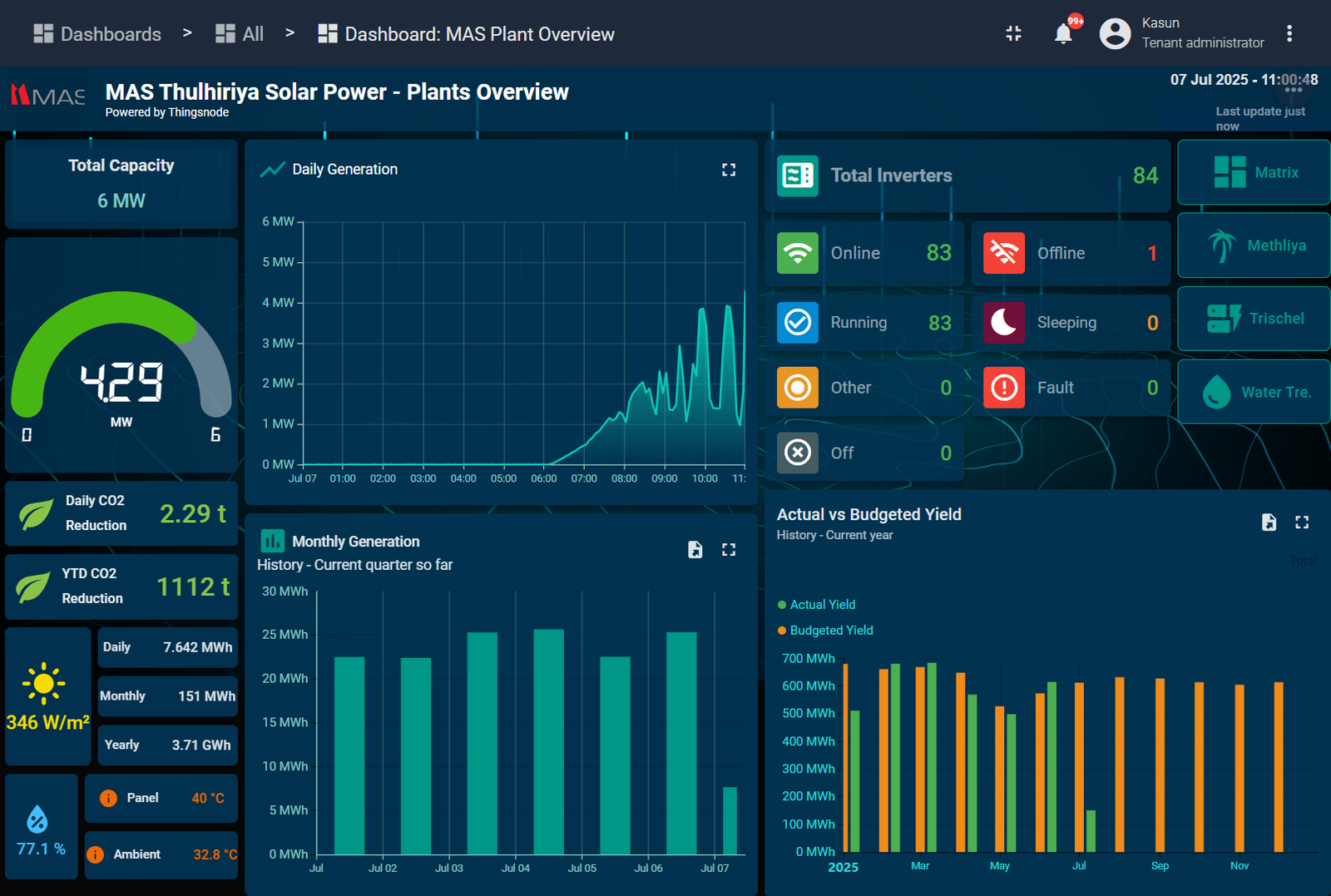
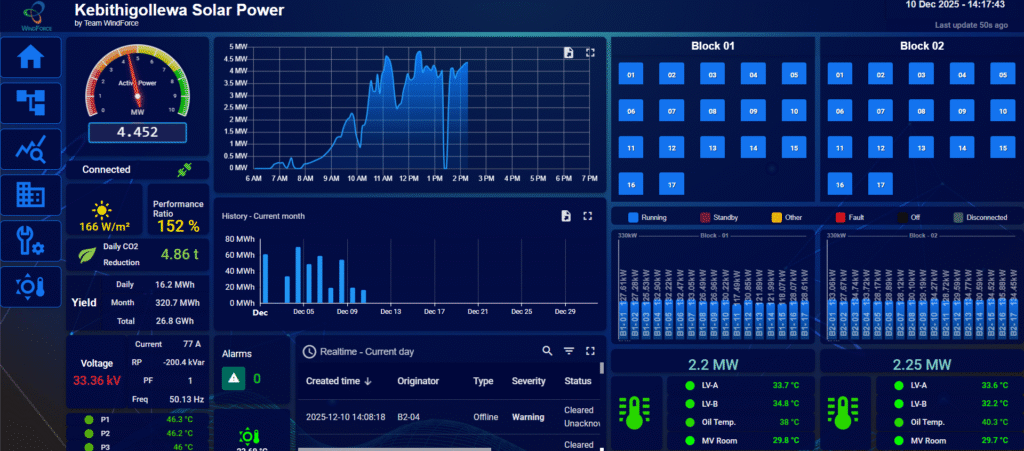
Traditional SCADA dashboards are often cluttered, outdated, and not user-friendly. Using ThingsBoard’s PE widgets and our custom-made components, we transformed the experience into something more modern and meaningful.
Features We Delivered
✔ Clean, intuitive visualizations
✔ KPI summaries for quick decisions
✔ Real-time inverter & tracker views
✔ Weather correlation analytics
✔ Fault history & predictive patterns
✔ Multi-site comparison dashboards
We can modify dashboards in minutes based on customer requests—no heavy redevelopment needed.
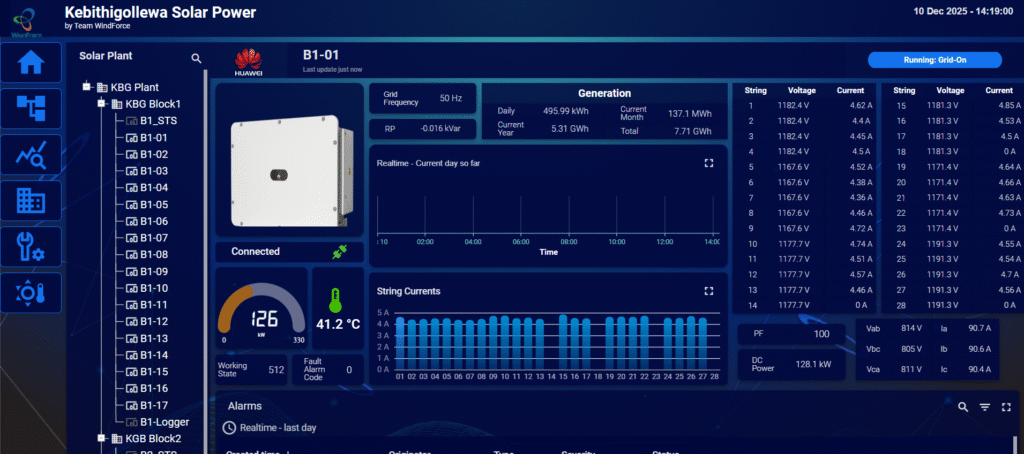
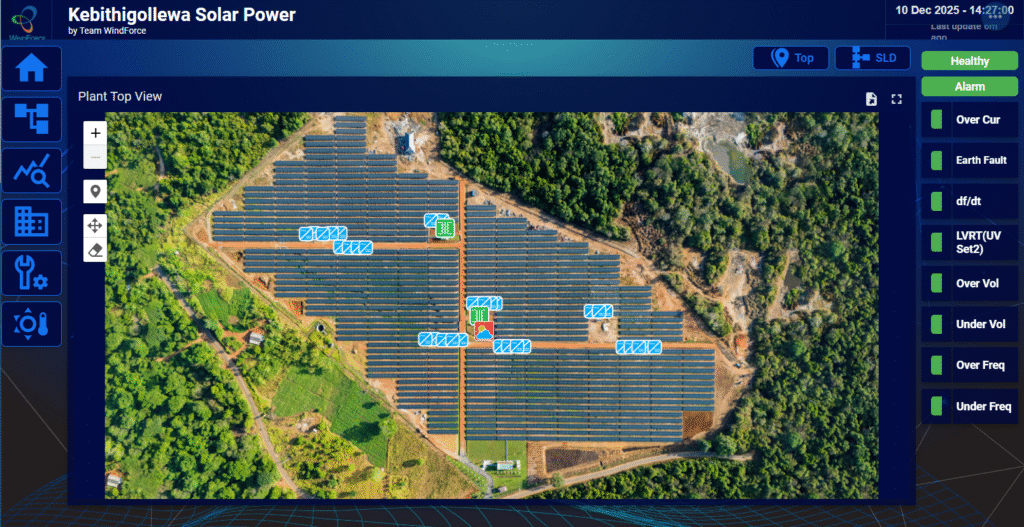
Deployment Success: 4 Solar Power Plants (10MW Each)
We have already deployed this architecture across four 10MW solar power plants in Sri Lanka. Each deployment includes:
-
- 50+ field devices
-
- Local Edge processing
-
- Cloud analytics
-
- Custom dashboards tailored to site-level and organizational needs
The system has demonstrated:
-
- Strong reliability
-
- Better visibility for both operators and management
-
- Faster troubleshooting
-
- Improved decision-making
-
- Higher energy yield insights
Conclusion
Our deployment of ThingsBoard PE and ThingsBoard Edge across multiple 10MW solar power plants in Sri Lanka has transformed how operators and management teams engage with their energy assets. By combining real-time SCADA functionality with a modern IoT analytics platform, we have created a scalable, reliable, and future-ready solution that supports inverter monitoring, solar tracker insights, environmental data, and multi-site performance comparisons.
As the nation increases its renewable energy footprint, digitalizing solar operations with IoT-powered SCADA will play a critical role in improving energy yield, reducing downtime, and enabling data-driven decision-making. With a flexible and highly customizable monitoring platform built on ThingsBoard, Sri Lanka’s solar industry is better positioned to meet the challenges and opportunities of the clean-energy future.
If you’re exploring how to optimize your own solar assets—or want to upgrade from a traditional SCADA approach—this modern IoT-driven architecture is one of the strongest pathways forward.
-
Demand response pilot project for the microgrid at University of Moratuwa.
The University of Moratuwa, in collaboration with Chemonics...
-
How We Built a Real-Time IoT Platform for Sri Lanka’s Solar Power Plants
Introduction As Sri Lanka continues expanding its renewable...
-
How MAS Holdings Unified Their Renewable Energy Monitoring with THINGSNODE’s Vendor-Independent IoT Platform
In today’s fast-evolving energy landscape, enterprise-scale solar adopters...